RCS ATSC: Real-time spectral analysis of ATSC 3.0 + 5G Broadcast hybrid channels
Monitoring a hybrid channel requires a system that understands its structure. RCS ATSC does exactly that.
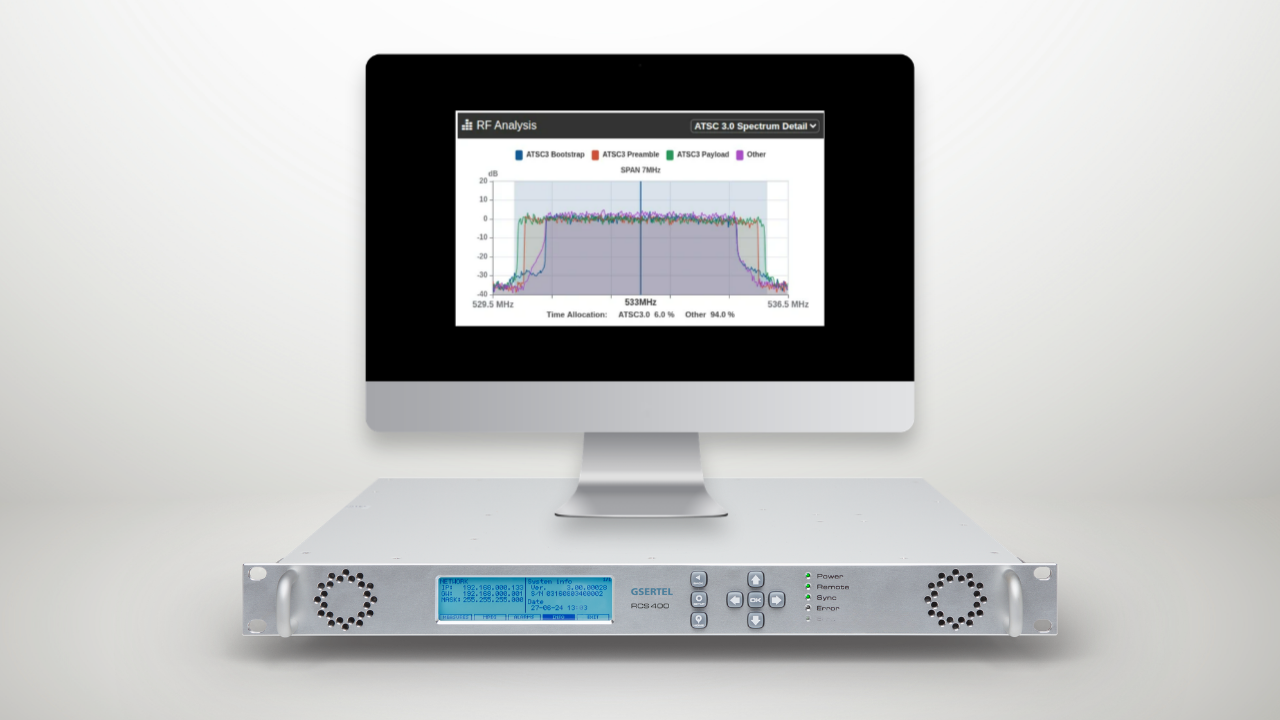
Monitoring a hybrid ATSC 3.0 / 5G Broadcast transmission is not the same as monitoring a conventional ATSC 3.0 signal. The hybrid signal channel is not a single, homogeneous block — it has two components with different contents, each occupying the spectrum at different times. Understanding what is happening inside that channel requires a monitoring system capable of distinguishing between them.
That is precisely what the new spectral analysis functionality of the RCS ATSC does, thanks to the Time-Mux Mode operating mode.
Inside an ATSC 3.0 channel: what is actually there?
Before diving into the functionality itself, it is worth understanding the structure of an ATSC 3.0 frame — because each part has a different function and a different spectral footprint.
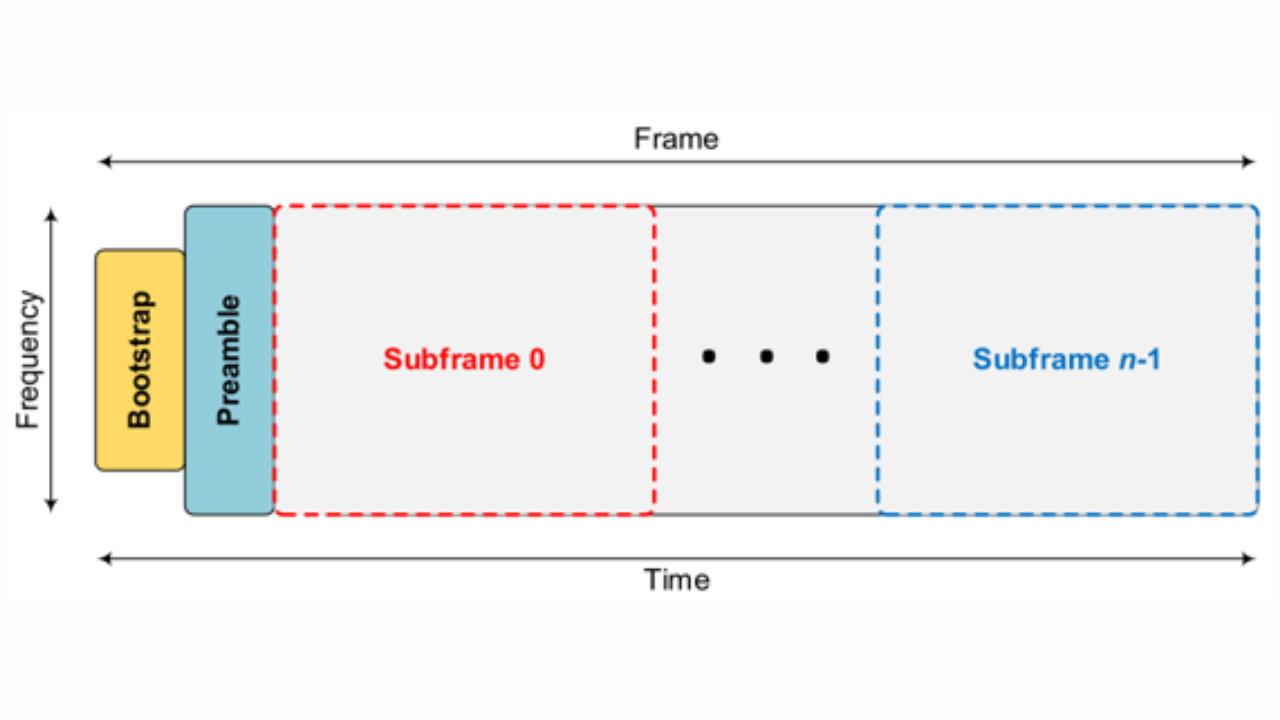
Bootstrap is the entry point of each ATSC 3.0 frame. It is a short and robust preamble, always transmitted with the same fixed parameters, regardless of how the rest of the frame is configured. Its function is to allow receivers to find and lock onto the signal under any condition, even before knowing anything about the transmission configuration. The Bootstrap is always present, always the same, and is designed to be decodable even with very low signal levels.
The Preamble follows the Bootstrap and carries the signaling layer — the data that tells the receiver how the rest of the frame is structured. This includes the physical layer configuration, subframe distribution, and service multiplexing information. Without the Preamble, the receiver cannot correctly interpret the Payload that follows.
The Payload is where the actual content resides — audio, video, data services, and any other content being broadcast. It typically occupies the largest portion of the frame and is divided into subframes.
Time-Mux Mode: monitoring adapted to hybrid transmissions
In an ATSC 3.0 / 5G Broadcast hybrid deployment, the ATSC 3.0 standard provides a mechanism — the min_time_to_next parameter, which is signaled in bootstrap symbol 1 — that creates controlled gaps in the ATSC 3.0 transmission. During these gaps, 5G Broadcast bursts are inserted into the same RF channel. From a spectral analysis perspective, these bursts appear as a differentiated signal component that occupies the channel during the intervals between ATSC 3.0 frames. The RCS ATSC identifies and classifies this component as Other, accurately separating it from the native ATSC 3.0 structure.
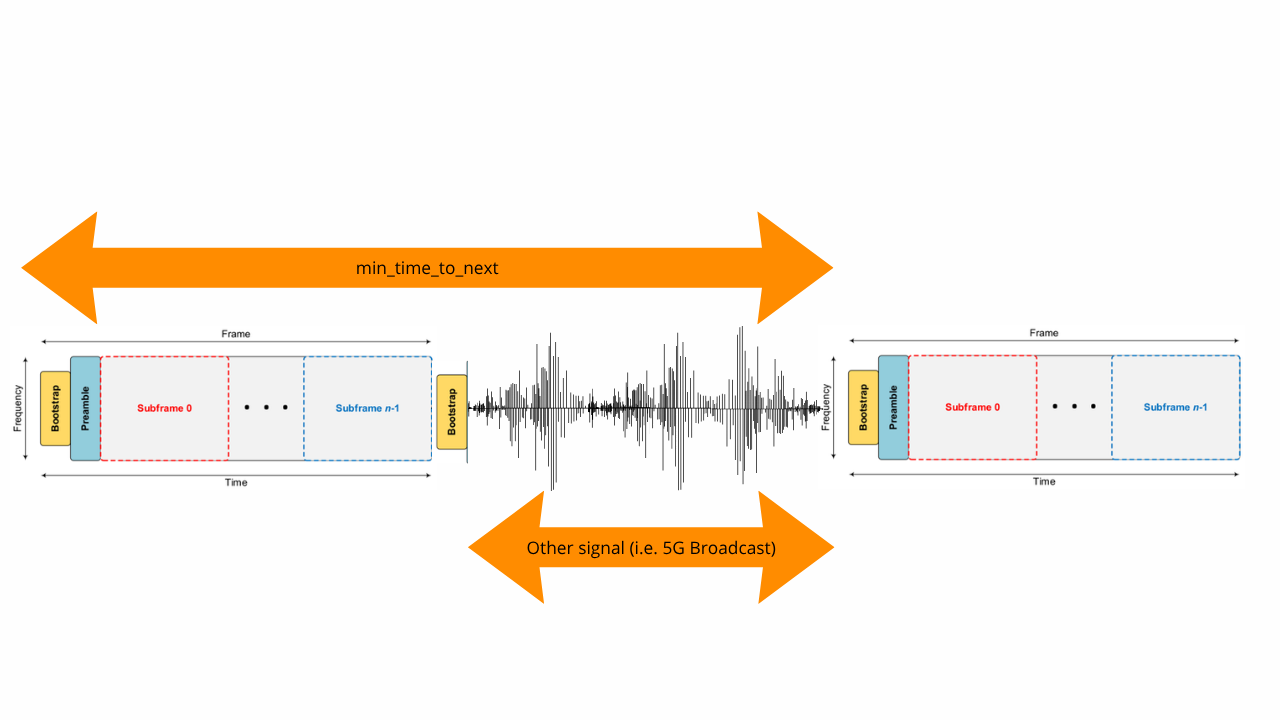
A standard monitoring probe can synchronize without difficulty and measure signal parameters continuously. However, in an ATSC 3.0 / 5G Broadcast hybrid transmission, the ATSC 3.0 signal arrives in bursts, with gaps between frames occupied by the 5G Broadcast component. A conventional probe may lose synchronization during these gaps, misinterpret the signal, or simply fail to decode it.
Time-Mux Mode is a configurable operating mode in the RCS ATSC, specifically designed for this scenario. When activated, the system adapts its synchronization and demodulation process to the discontinuous temporal structure of the signal: it detects the boundaries of each ATSC 3.0 frame, maintains synchronization between bursts, and correctly analyzes both active and inactive intervals — which is precisely where the 5G Broadcast component resides.
The result is stable and reliable monitoring of the complete transmission, without synchronization losses or false alarms.
Key parameters for understanding the channel's temporal structure
Alongside component-based spectral analysis, the RCS ATSC measures and displays in real time two fundamental parameters for characterizing the temporal structure of a hybrid transmission:
Min. time to next (ms) is the parameter defined in the ATSC 3.0 standard that indicates the minimum time, in milliseconds, until the start of the next ATSC 3.0 frame. It is, essentially, the duration of the gap between frames — and therefore, the time available for inserting 5G Broadcast bursts. Knowing this value allows verification that the temporal planning of the hybrid transmission is correct and that the gaps allocated to 5G Broadcast correspond to what has been configured in the transmission system.
L1B_frame_length_ms indicates the total duration of the ATSC 3.0 frame, expressed in milliseconds, as signaled in the L1B layer of the Preamble. Together with min_time_to_next, this parameter allows the complete temporal structure of the channel to be reconstructed: how long each ATSC 3.0 frame occupies, and how much time remains available for the 5G Broadcast component. The relationship between both values is also a direct indicator of the capacity distribution between the two standards coexisting in the channel.
What the RCS ATSC now does with all this information
The new functionality performs real-time spectral analysis of all signal components present in the channel: ATSC 3.0 Signal (Bootstrap, Preamble, Payload) and Other (in our scenario, the 5G Broadcast signal).
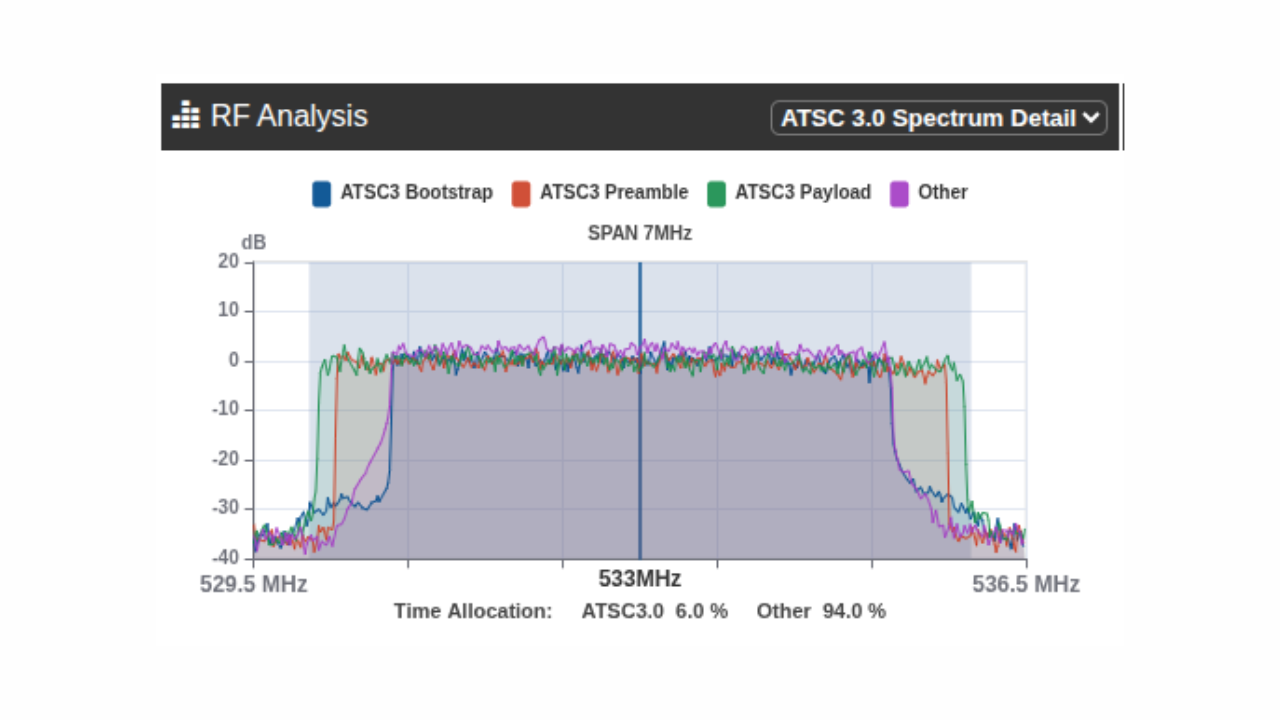
For each component, the system generates an independent spectral view — allowing the characteristics of each part of the transmission to be evaluated separately, rather than obtaining an averaged spectrum that mixes everything together. The result is a much more accurate picture of what is actually being transmitted in the channel at any given moment.
In addition, it provides information on the percentage of time each type of signal is being transmitted (Time Allocation). In the image above, we can see that 94% of the time a 5G Broadcast signal is being transmitted.
For networks where ATSC 3.0 and 5G Broadcast coexist in the same channel, this capability is essential: it allows verification not only that the ATSC 3.0 signal is in good condition, but also that the 5G Broadcast component is present, correctly positioned in time, and that it is not interfering with the broadcast signal.
Monitoring a hybrid channel requires a system that understands its structure. RCS ATSC does exactly that.