5G Private Networks Deplyment: Hexylon Gamma, one sigle measurement tool for the whole process
Deploying a private 5G network? You'll want to see this.
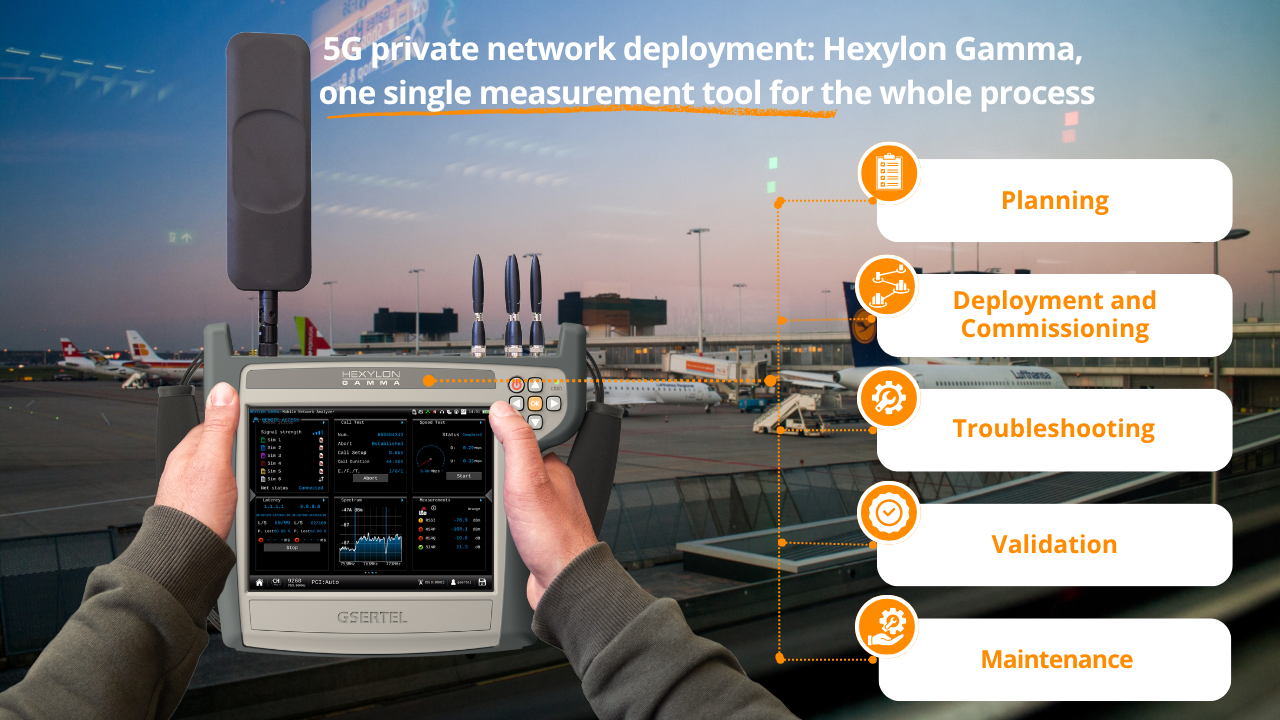
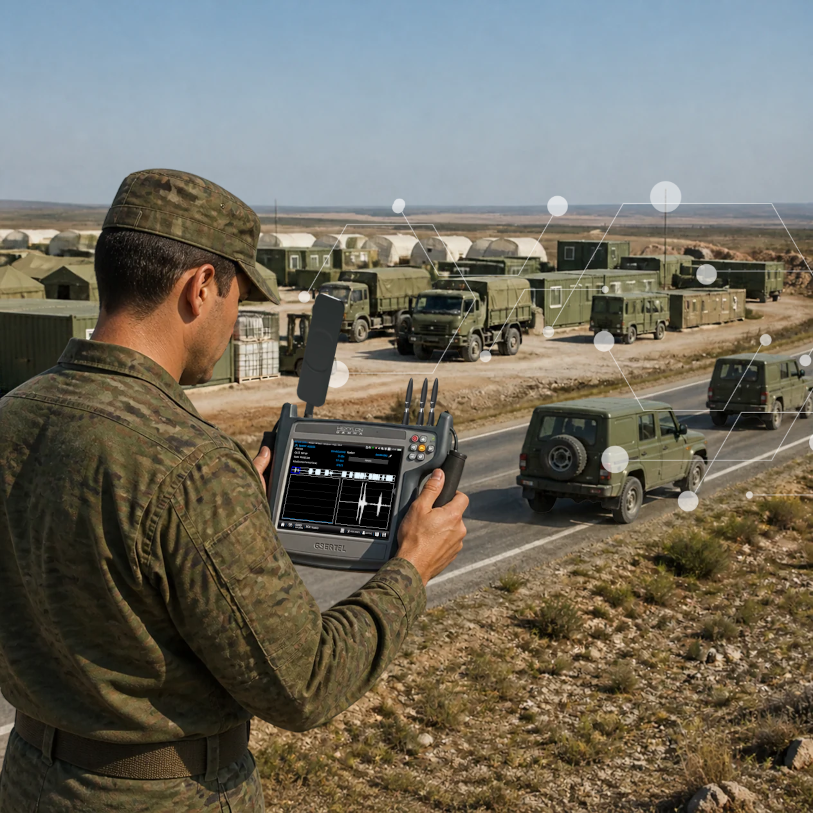
Mines, airports, ports, factories or tactical 5G bubbles for the Armed Forces: more and more organisations rely on a private network for their critical processes. And in a private network, KPIs are not generic: they depend on the use case. A video system can tolerate higher latency, but it needs high and sustained throughput. An industrial control system needs low latency, low jitter and stable behaviour.
This is even more important in private 5G networks deployed for defence and security, where isolation, traceability and predictable behaviour are also required.
That is why a private 5G network needs field measurements at every stage of the project, not only at the end: to plan it properly, deploy it correctly, validate it and maintain it over time. At every stage, the underlying question is the same: does the network deliver what the application needs, at radio and service level? And answering it requires combining passive and active measurements.
A single instrument for the whole project
Hexylon Gamma is a portable mobile network analyser that works on 5G, 4G, 3G and 2G, integrating passive and active measurements in a single instrument. From an operational point of view, this reduces both acquisition cost and diagnosis time, since there is no need to use different instruments for RF, connectivity, latency and throughput. It also accompanies the technical team from the first site survey to the maintenance of the network in service.
1. Planning and site survey
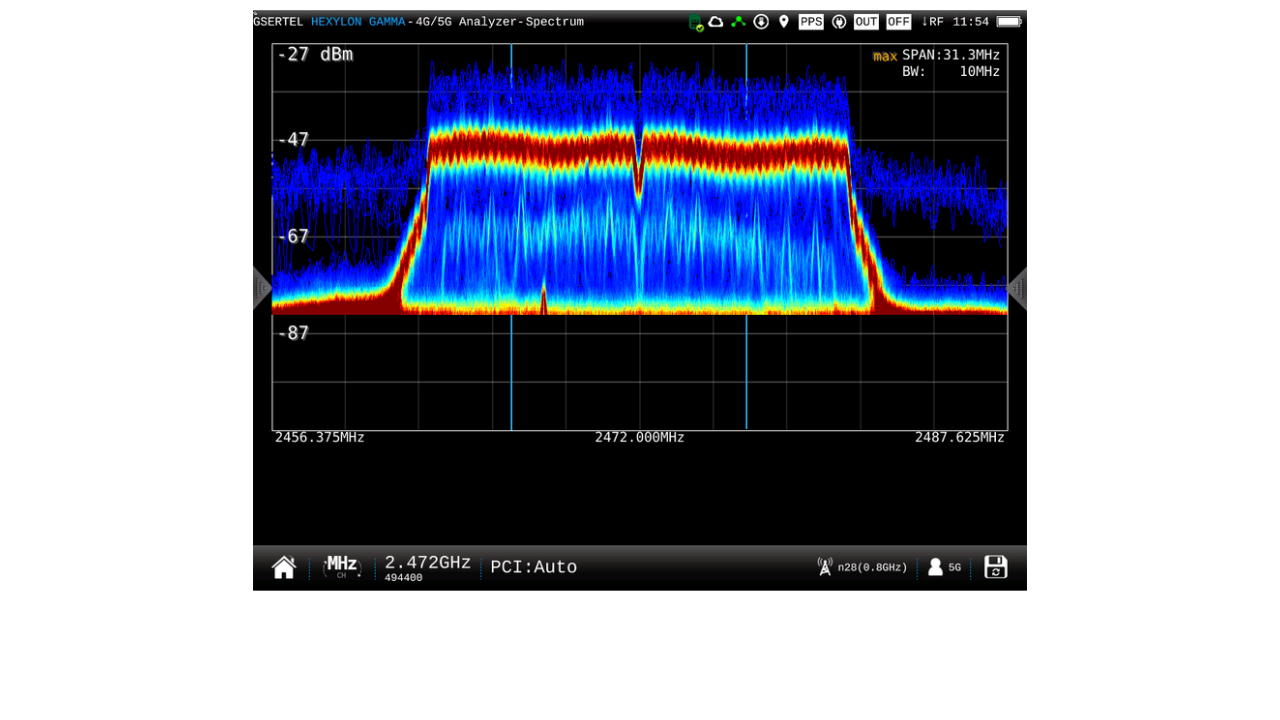
Before installing any equipment, it is important to understand the radio environment. With the spectrum analyser and scanner of Hexylon Gamma, it is possible to check whether the planned band is clean, detect potential sources of interference (machinery, power electronics or other radio systems) and identify cells from other networks present in the area. All of this without a SIM card or network registration.
This way, channel selection and radio placement are based on real measurements, not only on simulations.
2. Deployment and commissioning
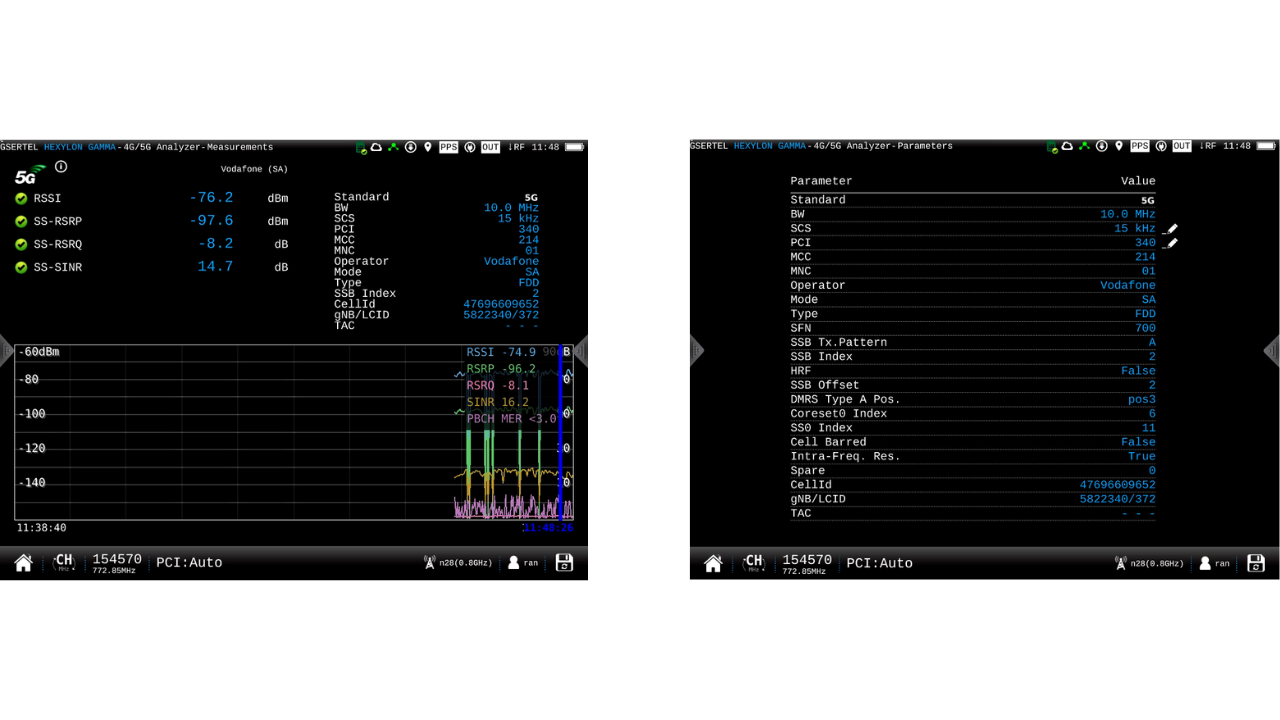
Once the radio is installed, it is necessary to check that it transmits exactly what was planned: band, channel, PCI, bandwidth, SCS, SA mode, TAC and the rest of the cell parameters. A network may appear to perform well and yet be wrongly identified or misconfigured.
Beam analysis, correlated with GPS, makes it possible to verify that coverage and antenna orientation are consistent with the design, and to locate shadow areas or transitions between beams before the network goes into service. It also makes it possible to verify that the transmitter is properly synchronised.
3. Validation and acceptance
This is the moment to confirm that the network meets the requirements of the use case, combining both types of measurement:
Passive analysis (radio layer measurements and parameters, beam analysis, persistent spectrum):
It detects most structural problems even before the terminal is registered on the private network. At RAN level, it answers very specific questions: which cell am I receiving, at what level, with what quality, from which beam, with what configuration and in what spectral environment.
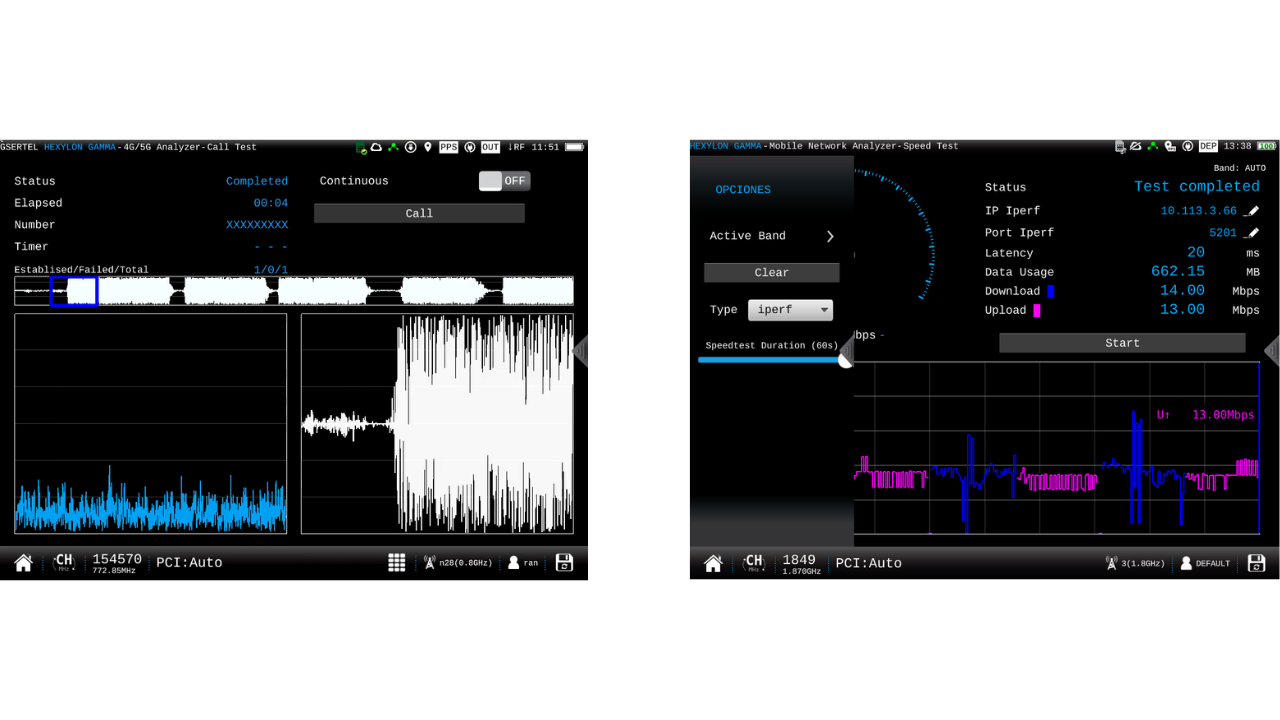
Active analysis (Modem status, latency, speed test, web test):
While passive analysis validates the health of the radio interface, active analysis validates the network experience. When both results are consistent, the validation is robust.
4. Optimisation and troubleshooting
When passive and active results diverge, there is usually a clear indication of where the problem lies: radio, core, terminal configuration or transport plane. Hexylon Gamma makes it possible to follow the complete RAN troubleshooting workflow: first, the channel, band and cell are identified; then power, quality and noise are evaluated; next, configuration parameters and possible interference are reviewed; and finally, it is verified that the terminal carries traffic correctly and with the expected performance.
This is exactly what an optimisation engineer needs: a tool that does not just display isolated metrics, but makes it easy to correlate cause and effect.
5. Operation and maintenance
A private network changes over time: new machinery is added, the installation is modified, software is updated or new interference appears. Periodically repeating the same measurement campaigns makes it possible to compare results between dates, detect degradations in time and document the status of the network.
Automation: Job Planner and report generation
To keep measurements comparable across all these stages, Hexylon Gamma incorporates a powerful automation layer.
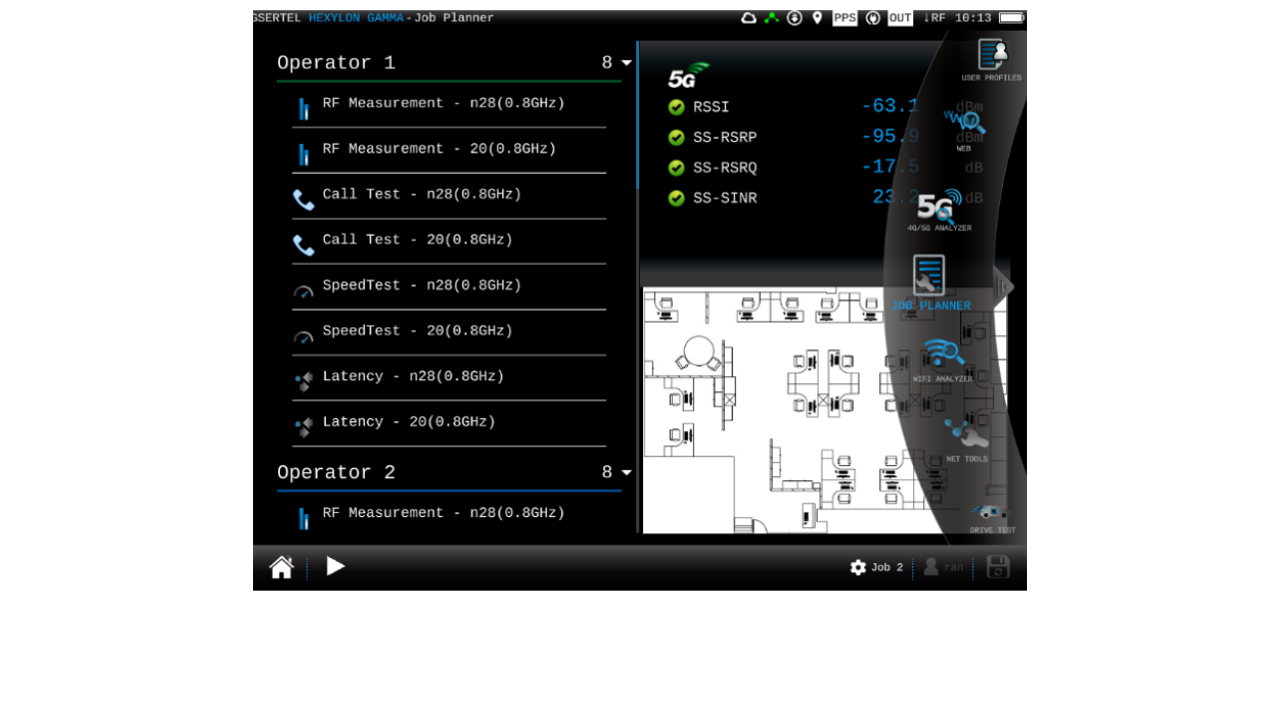
Job Planner:
It allows you to define automatic measurement sequences, repeat tests at different points of the installation and generate reports systematically. You can work on a floor plan, perfect for indoor installations, or on a GPS map, for large areas.
From an operational engineering perspective, the real value lies in the repeatability and consistency of the tests. When measurements are always run with the same workflow, comparisons between locations, dates or network versions are much more reliable.
Report generation:
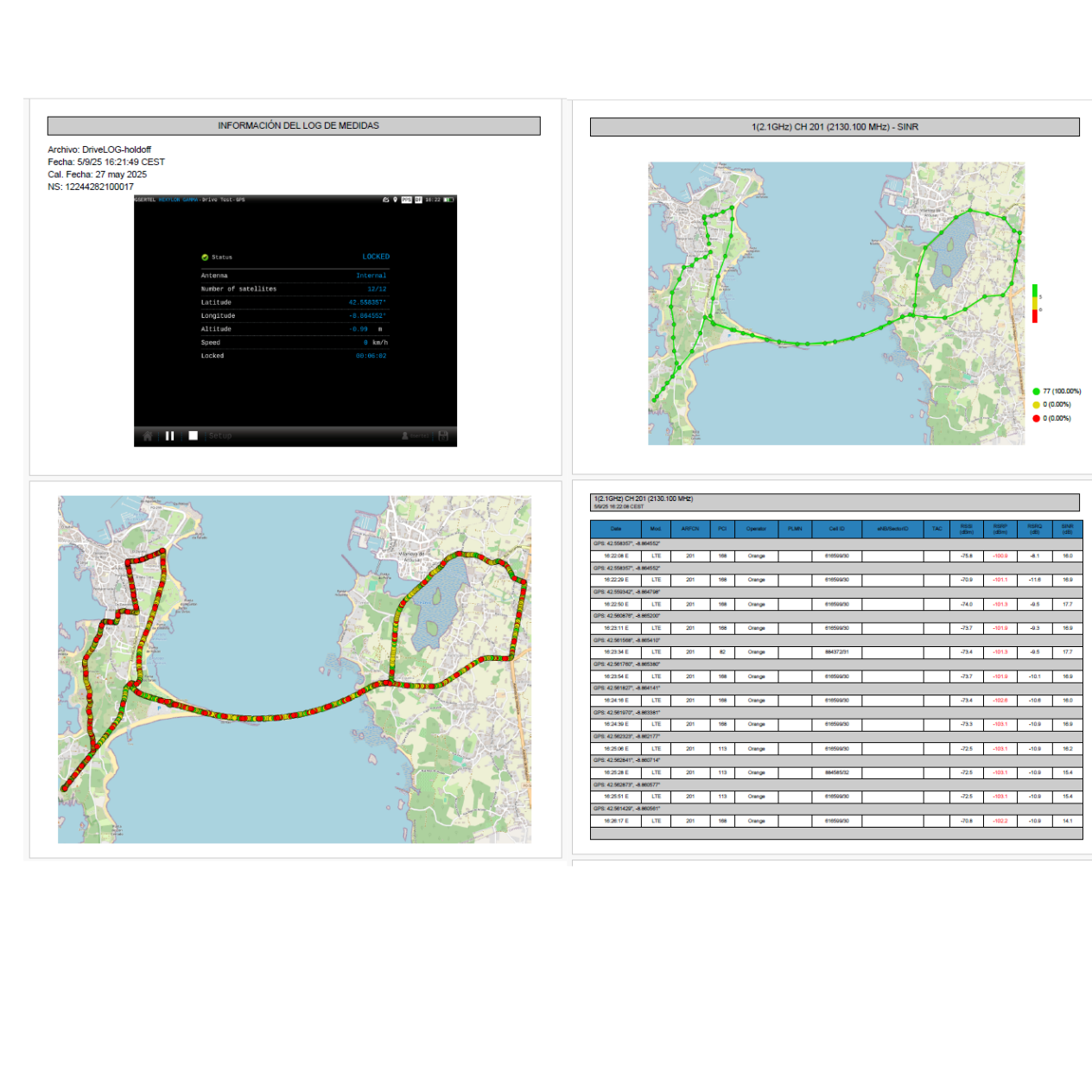
Hexylon Gamma creates complete reports in just two clicks, in PDF and XLS format (with measurements, maps with measurements filtered by channel, and screenshots), as well as KML coverage maps (with filtering by measurement and channel).
Let’s talk about your project
If you are preparing the deployment of a private 5G network, or a bid for one, contact us and we will show you how Hexylon Gamma can support you at every stage.